If Shopify takes the order and bills the customer…
what’s the percentage for?
It’s a fair question with a real history. Here’s what subscription platforms actually do, and what they don’t.
- Subscription platform: share of revenue
- %
- Platform fee: every single order
- $
- What does it buy?
- ?
Everybody pays it. Almost nobody can say why.
Every subscription brand on Shopify pays the same two line items: a percentage of subscription revenue, and a fee on every single order. The smartest operators in CPG pay it. The biggest brands you know pay it. It’s just how it’s done, and that’s the strange part.
Ask what the percentage actually buys, and the room goes quiet. It’s not a scandal. It’s a habit. But habits have histories, and this one is worth telling.
There was a time the fee earned every penny.
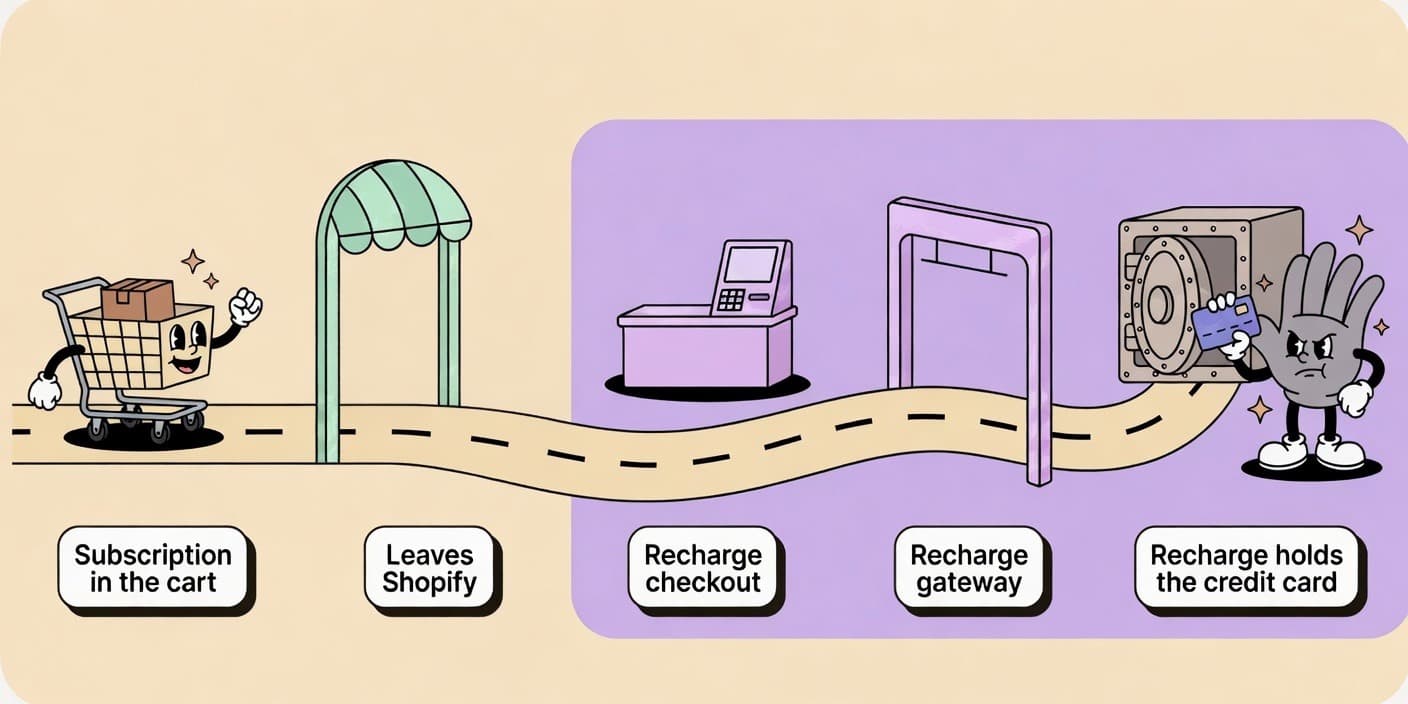
Rewind to the early days. The only real game in town was Recharge, and their full name mattered: Recharge Payments. If a customer had a subscription in their cart, they didn’t check out through Shopify at all. They left. They checked out on a Recharge page, running Recharge’s own payment gateway.
Recharge processed the transaction.
Recharge stored the credit card.
And on renewal day, Recharge charged that credit card itself.
Look at that work and the pricing explains itself: a percentage of revenue plus a per-order fee is what payment processing costs, everywhere.
They weren’t skimming: they were doing the billing. The fee was fair.
Then Shopify built the Subscriptions API, and the work moved.
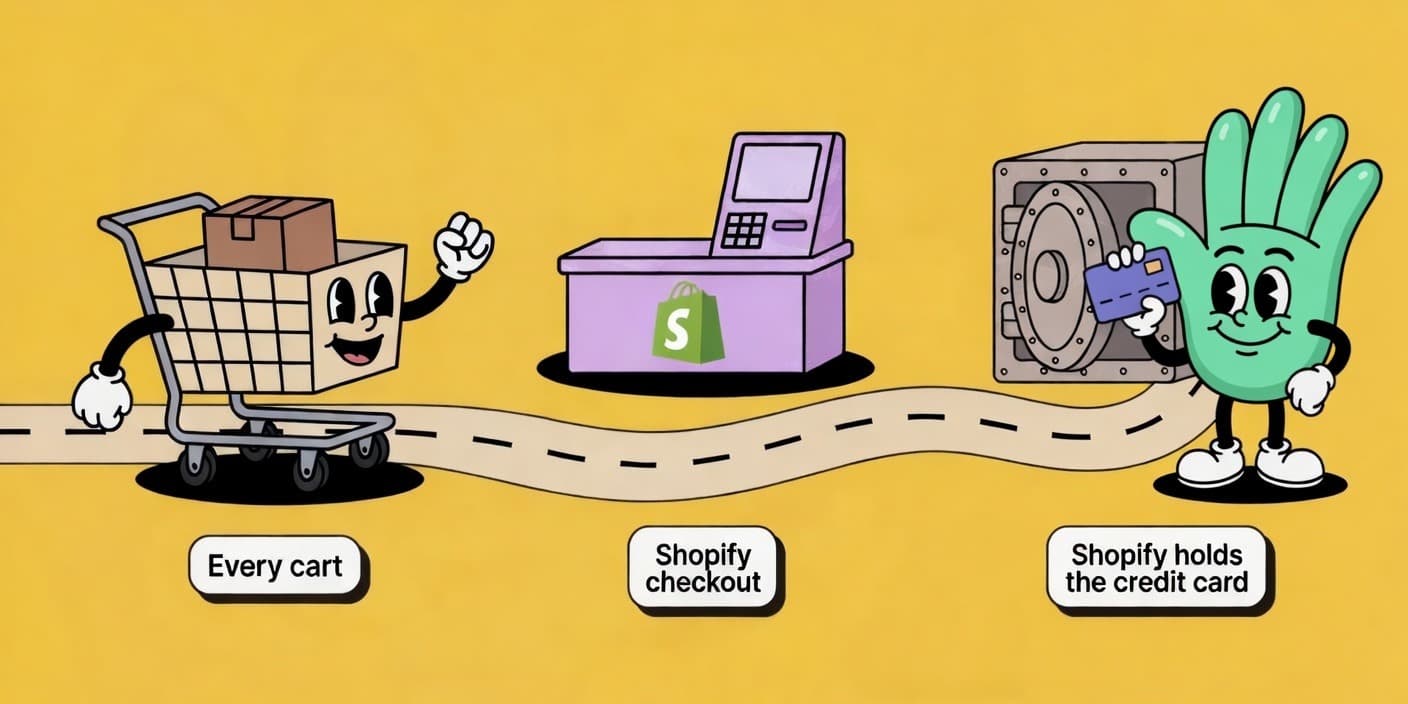
Subscription orders now go through the Shopify checkout: every order does: one-time, subscription, mixed carts, all of it. The third-party checkout pages disappeared. And the credit cards moved with them: instead of the app storing your customer’s credit card and charging it, Shopify stores it. Shopify’s own documentation says it plainly: payment methods are saved so future orders can be charged without requiring the customer to manually go through checkout.
“…without requiring the customer to manually go through checkout.”
The platforms went from processing payments to triggering them.
The work changed. The pricing didn’t.
So what does a subscription platform do now? Three things.
- 01: The clock
It keeps a clock.
The platform stores your customer’s next billing date. Every day a timer fires, the schedule clicks forward, and for each subscription that’s due it tells Shopify: “It’s time — bill them.” Shopify charges the stored credit card, creates the order, and takes it from there. In Shopify’s own words: apps charge customers
by initiating a billing attempt.
That’s the whole billing job. - 02: The switchboard
It sends the messages.
Renewal coming up? Send an email. Payment failed? Send a text. Customer replies “skip”? Update the subscription. The platform is the switchboard between your subscription events and your inbox.
- 03: The ledger
It remembers the status.
Active. Paused. Cancelled. A subscription’s state is a row in a database, and the platform is its bookkeeper.


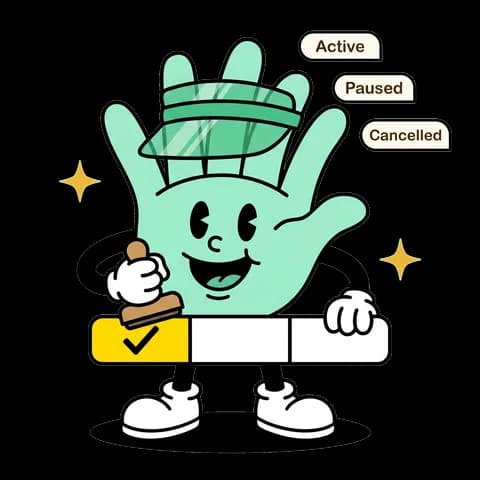
That’s the core of it: a clock, a switchboard, and a ledger.
The good platforms dress it well: customer portals, cancellation saves, analytics, perks and rewards, payment-retry logic. Real features, really useful. But the engine under all of them is the three things above.
The fee outlived the work.
The percentage made sense when the platform took the order, ran the checkout, stored the credit card, and processed the payment. Shopify does all of that now. What’s left is pricing from a world that no longer exists: a relic, kept alive by habit. Nobody’s cheating anyone. But nobody’s asking, either.
You asked the question at the top of this page.
Now you can answer it.
We should say who’s writing this.
We spent years building on top of these platforms: our cart software ran on the incumbents’ rails across a hundred-plus CPG brands, so we know exactly what the machinery does, because we built around it. Then we built the machinery ourselves: a subscription platform we ran past $1B in GMV on Shopify. And then we did the thing the history above finally allows: we open sourced it.
It charges 0% of your revenue and $0 per transaction because a platform that triggers the billing shouldn’t charge like it processes the payments. Ours doesn’t.